The appeal and uses of burdock as a health food
Burdock is gaining attention as a health food, and we will introduce you to its appeal and practical uses in detail. By fully understanding the characteristics and nutritional components of burdock, we will explore how to maximize its health benefits. Discover a new side of burdock in this article and use it to help manage your daily health.
table of contents
-
What are the health benefits of burdock?
-
Nutritional content of burdock
-
Burdock's unique components and their functions
-
-
How to use burdock as a health food
-
Burdock cooking methods and recipes
-
How to store burdock
-
-
Burdock: Precautions and Solutions
-
Precautions when handling burdock
-
How to take burdock effectively
-
-
Vitamins and minerals in burdock
-
Vitamins in Burdock
-
Minerals contained in burdock
-
-
Comparison of Burdock with Other Vegetables
-
Nutritional value of burdock compared to other vegetables
-
Health benefits and comparison of vegetables
-
-
Burdock dishes and ideas
-
Tips for eating burdock deliciously
-
Burdock dish ideas
-
-
From the burdock field to the kitchen
-
Burdock production process
-
Burdock processing and cooking
-
-
Considering burdock from multiple angles
-
Thinking about the environment through burdock
-
Burdock as a food education
-
What are the health benefits of burdock?
Here we will explore why burdock is attracting attention as a health food and unravel how its unique components affect our bodies.
Nutritional content of burdock
Burdock is popular as a health food, and its nutritional components have been attracting attention. First of all, burdock is rich in dietary fiber. In particular, it contains a lot of water-soluble dietary fiber called inulin, which is expected to have the effect of regulating the intestinal environment. Inulin serves as food for good bacteria, improving intestinal flora, thereby helping to relieve constipation and maintaining intestinal health.
In addition, burdock contains antioxidants such as polyphenols and saponins, which neutralize active oxygen in the body. This is said to prevent cell aging and help maintain health. It also has an anti-inflammatory effect, so it is expected to contribute to the prevention of lifestyle-related diseases.
Burdock's nutritional content also includes vitamins. Burdock is particularly rich in B vitamins and vitamin E, which are involved in energy metabolism, maintaining immune function, and acting as antioxidants. B vitamins are an important factor in supporting physical and mental health, and are also thought to be useful in dealing with stress.
Burdock is also rich in potassium, which is said to contribute to regulating blood pressure by balancing with sodium. Potassium regulates the amount of water in the body and is also effective in eliminating swelling. For this reason, it is said to be effective in reducing the risk of high blood pressure and heart disease.
Burdock also contains a lot of minerals, especially iron and calcium. Iron is an essential component for blood production and helps prevent anemia. Meanwhile, calcium supports healthy bones and teeth, and is important for a wide range of age groups, from growing children to the elderly.
As mentioned above, burdock contains a variety of nutrients and is attractive as a health food. By incorporating it into your daily diet, you can effectively consume its nutrients and support a healthy lifestyle. By understanding the properties of burdock and using it effectively, you may be able to aim for better health.
Burdock's unique components and their functions
Burdock contains many unique components that have various effects on health. Among them, the components that are particularly noteworthy are fructooligosaccharides and saponin.
Fructooligosaccharides are a type of sugar found mainly in burdock root. This component is part of dietary fiber and has the effect of increasing the good bacteria in the intestines. Increasing the good bacteria will activate the intestines, which is expected to relieve constipation and improve intestinal flora. In addition, because fructooligosaccharides are difficult to digest, they also have the effect of moderating the rise in blood sugar levels. This may make them useful for preventing diabetes and dieting.
Next, saponin is one of the unique components of burdock, and is known to have antioxidant properties. Saponin is expected to suppress active oxygen in the body and prevent cell aging. It also works to improve immune function, and is thought to contribute to increasing resistance to infections. In this way, saponin is an important component that contributes to maintaining overall health.
Furthermore, burdock's bitter component, chlorogenic acid, cannot be ignored. This component has a strong antioxidant effect, helps to eliminate toxins from the body, and supports liver function. Chlorogenic acid also slows down the absorption of sugar, and is said to potentially contribute to the prevention of diabetes and obesity.
Burdock also contains allyl acid, which is the source of its unique aroma. This ingredient is effective in aiding digestion and is expected to stimulate appetite. Eating burdock may be a good option, especially for those who suffer from indigestion or loss of appetite.
As you can see, burdock contains a variety of unique components, each of which has a positive effect on health. By understanding the properties of burdock and incorporating it into your diet, you may be able to maximize its health benefits. We hope that making good use of burdock in your daily diet will help you maintain a healthy lifestyle.
How to use burdock as a health food
Next, we will introduce some specific ways to incorporate burdock as a health food into your daily life.
Burdock cooking methods and recipes
Burdock is an ingredient used in a variety of dishes due to its unique flavor and texture. In order to make the most of its health properties, it is important to know how to cook burdock deliciously. Here we will introduce some cooking methods and simple recipes for burdock.
First, when cooking burdock, start by peeling it. Burdock skin is rich in nutrients, but it is prone to retaining dirt and grime, so it is common to wash it thoroughly before peeling it. There are several ways to cut burdock, but you can enjoy different textures for different dishes by slicing it into thin strips, rings, or julienned pieces.
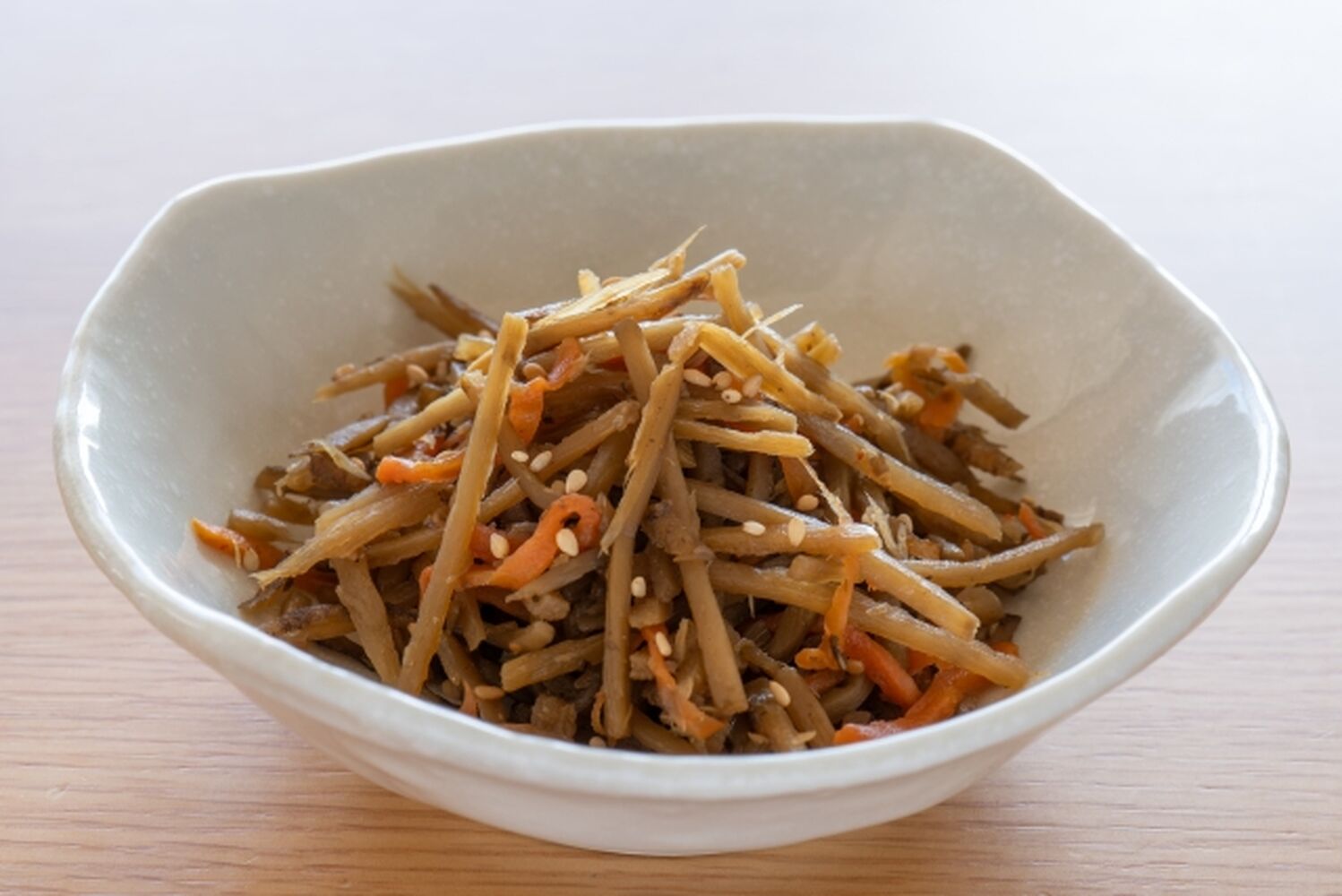
One of the recommended cooking methods is Kinpira Gobo. Cut the burdock into thin strips and fry in sesame oil in a frying pan. Add soy sauce, mirin, and sugar to season, and sprinkle sesame seeds on top to create a fragrant and flavorful dish. Kinpira Gobo is also a great dish for health-conscious people, as it is packed with dietary fiber.
Stewing is also a popular cooking method. If you shred burdock and simmer it in stock with other vegetables and meat, you can enjoy a deep flavor. The root vegetable's flavor comes out and you end up with a nutritious soup. In particular, when combined with taro or carrots, the color is beautiful and it will add color to your dinner table.
Burdock can also be enjoyed as a deep-fried food. For example, burdock tempura has an excellent texture when deep-fried in a light batter. Cut the burdock into thin strips, add water to tempura flour to make a batter, and deep fry in oil at about 170 degrees to create a fragrant tempura. Serve with tempura sauce and salt.
Finally, burdock soup is also recommended. Simmer sliced burdock until soft, then add milk or soy milk to create a creamy, nutritious soup. Add vegetables and chicken to your liking for a well-balanced dish.
As such, burdock can be used in a variety of cooking methods, and its appeal as a health food can also be fully brought out. By actively incorporating burdock into your daily meals, you can promote your health while enjoying its delicious taste.
How to store burdock
To enjoy burdock deliciously, it is important to know the correct way to store it. If you purchase fresh burdock, you can preserve its flavor and nutritional value for a long time by storing it in a way that suits its characteristics.
First of all, burdock is sensitive to humidity, so it is important to store it in a well-ventilated place. It is also important to avoid direct sunlight. Burdock cells can be damaged and the quality can easily deteriorate if exposed to sunlight. Therefore, it is ideal to store it in a dark or cool, dark place.
If you are not going to use it right away, it is a good idea to wrap it in newspaper or kitchen paper and then store it in a plastic bag. This method will keep the humidity at a moderate level while absorbing excess water, so the burdock will not wilt.
When storing burdock in the refrigerator, it is best to store it in the vegetable compartment. If you leave the soil and roots that come with it when you buy it, it will stay fresh for a while. However, if you are storing it for a long time, it is better to remove the dirt, wrap it up, and store it in the refrigerator.
If you want to store burdock for a long time, freezing it is one way to do so. First, cut the burdock to an appropriate length, boil it lightly, then cool it in water and drain it thoroughly. After that, put it in a storage bag and freeze it, and it will stay delicious for several months. Freezing burdock is an effective way to preserve it without losing its nutrients.
On the other hand, if the burdock becomes discolored or shriveled during storage, you can cut off that part and use it, but if the overall quality has deteriorated, it is best to discard it.
By storing burdock properly, you can use it in cooking in a fresh and delicious state when you need it. Please refer to these storage methods and incorporate burdock into your daily meals to help you with your daily diet. Enjoy delicious and healthy cooking while keeping in mind the storage conditions.
Burdock: Precautions and Solutions
We will explore the precautions and solutions to properly handle burdock and make the most of every bit of it.
Precautions when handling burdock
There are a few things to keep in mind when handling burdock. By understanding these, you will be able to enjoy burdock more safely and deliciously.
First of all, burdock has a thin skin and can be difficult to handle. You need to be especially careful when cutting it. When using a knife, if you use too much force, your hand may slip, so be sure to cut slowly and carefully. The cut may be at an angle, so it's a good idea to create a stable surface to slice it at a consistent thickness.
Also, when handling burdock, your hands may turn black. This is because tyrosinase, a type of polyphenol in burdock, reacts with oxygen. To prevent your hands from turning black, wash your hands thoroughly before cooking and wear rubber gloves when cutting burdock. If your hands do turn black, rubbing them lightly with vinegar or lemon juice will often remove the color.
In addition, burdock has the property of absorbing moisture easily. Therefore, if it is left for a long time after being cut, it may wilt. It is important to cook cut burdock as soon as possible, or wrap it in damp kitchen paper or soak it in cold water to keep it fresh.
One thing to be careful of when cooking is not to overcook it. If you simmer it for a long time, the texture of the burdock may be lost. Be careful not to overcook it, especially if you are making it into a dish that is enjoyed for its crunch, such as kinpira.
Finally, burdock can have a strong astringent taste, so it is important to prepare it properly. In particular, after julienned or slicing it, soaking it in vinegar water or salt water will remove the astringent taste and reduce the spiciness. Following this process will make it even more delicious.
By following the above points, we hope you can make good use of burdock and enjoy cooking delicious dishes. Please try these tips to make the most of burdock's unique flavor and nutrition and lead a healthy diet.
How to take burdock effectively
In order to maximize the health benefits of burdock, it is important to understand the most effective way to consume it. Here are some tips for consuming burdock in a delicious and nutritious way.
First, you can eat burdock raw. By shredding it and adding it to a salad or using it as a dressing, you can consume dietary fiber and vitamins as is. Not only can you enjoy the unique flavor of burdock when it's raw, but the enzymes still remain, so it's expected to aid digestion. However, if you are concerned about the bitterness, you can lightly soak it in water to reduce the spiciness.
When cooking, light heating is recommended. Steaming or boiling in particular helps retain nutrients and also provides a pleasant texture. Steamed burdock is sweeter and has a moist texture. The key to this is to set the cooking time short, so that it retains a moderate firmness. For example, when stewing, finishing the stewing process quickly with other ingredients allows the flavor to soak in without wasting nutrients.
Another way to incorporate burdock into your cooking is to enjoy it in a variety of different ways. For example, adding burdock that has been fried first to soup will enhance the flavor and allow you to consume it without losing any of its nutrients. When making soup, simmering it with other vegetables will allow you to consume a variety of nutrients in a well-balanced way.
In addition, when incorporating burdock into your daily diet, it is effective to gradually incorporate it into your daily menu. For example, you can increase the variety of ways you consume burdock by not only including it as a dish, but also by incorporating it into your breakfast smoothie or adding it to omelets or rolled eggs.
As you can see, burdock can be eaten raw, or it can be cooked in a variety of ways to provide a good amount of nutrition and delicious flavor. By actively incorporating burdock into your daily meals, you can achieve a healthy lifestyle.
Vitamins and minerals in burdock
Burdock contains a variety of vitamins and minerals. Learn how they affect our health.
Vitamins in Burdock
Burdock is known as a health food that contains many nutrients, and is especially rich in vitamins. Among them, B vitamins and vitamin E are particularly noteworthy. These vitamins have various beneficial effects on our bodies.
Burdock contains B vitamins such as vitamins B1, B2, and B6. Vitamin B1 supports energy metabolism and contributes to reducing fatigue and improving concentration. Vitamin B2 helps maintain healthy skin and mucous membranes and is also involved in maintaining eyesight. Furthermore, vitamin B6 supports the health of the nervous system and is said to help relieve stress and depression.
Burdock is also rich in Vitamin E. This vitamin has a strong antioxidant effect and works to remove active oxygen from the body. Active oxygen is a factor in aging cells, so ingesting Vitamin E can be expected to have anti-aging effects. Vitamin E also promotes blood circulation and is said to be good for healthy skin.
Burdock also contains vitamin K, which plays an important role in supporting bone health. Vitamin K aids in calcium metabolism and contributes to bone formation and maintenance. It is an important nutrient, especially for the elderly, in preventing osteoporosis.
In this way, the vitamins contained in burdock support our health in various ways, including energy metabolism, skin, bones, and the nervous system. By incorporating burdock into your daily diet, you can efficiently ingest a rich variety of vitamins and help maintain a healthy lifestyle. We hope to take advantage of the nutritional value of burdock and use it in a variety of dishes.
Minerals contained in burdock
Burdock contains a wealth of minerals as well as vitamins, and these nutrients play an important role in supporting our health. The most notable are potassium, calcium, magnesium, and iron.
First of all, burdock is rich in potassium, which plays an important role in regulating the body's water balance. It is expected to work with sodium to keep blood pressure normal, so it is thought to contribute to the prevention of high blood pressure. Potassium is also involved in muscle function and nerve transmission in the body, making it an essential mineral for maintaining a healthy lifestyle.
Secondly, burdock also contains calcium. Calcium is an essential nutrient for forming bones and teeth, and is especially important for growing children and the elderly. Insufficient calcium intake can lead to a decrease in bone density and an increased risk of osteoporosis, so it is recommended that you consciously consume calcium on a daily basis.
Another nutrient that should not be overlooked is magnesium. Magnesium is involved in energy metabolism and contributes to muscle contraction and relaxation. It is also involved in stress relief and stable sleep, making it an important factor in supporting mental and physical health.
Finally, burdock also contains iron. Iron is a major component of hemoglobin, which makes up blood, and is an essential nutrient for transporting oxygen throughout the body. Women in particular tend to become deficient in iron due to menstruation, so it is important to consciously consume it.
As you can see, the minerals contained in burdock are extremely important in supporting bodily functions. To ensure that you get these minerals efficiently, include burdock in your daily diet and achieve a healthier lifestyle.
Comparison of Burdock with Other Vegetables
Let's take a look at the differences in characteristics and ingredients between burdock and other vegetables.
Nutritional value of burdock compared to other vegetables
Burdock is a vegetable that contains a variety of nutrients, but by comparing it with other vegetables, we can better understand its characteristics and differences in nutritional value. This time, we will compare the nutritional value of burdock with two representative vegetables: carrots and radishes.
First of all, the biggest feature of burdock is its abundance of dietary fiber. Burdock contains a lot of inulin, a water-soluble dietary fiber, which helps regulate the intestinal environment. Meanwhile, carrots also contain dietary fiber, but not in as much as burdock. However, carrots are rich in beta-carotene, which is converted into vitamin A in the body and supports eyesight and immune function.
Next, let's look at radish. Radish contains a lot of potassium and helps regulate the body's water balance. Radish also contains enzymes that aid digestion, making it a valuable accompaniment to meals. Burdock has different properties in this regard, and contains polyphenols and saponins, which are particularly expected to have anti-aging effects.
As for vitamins, burdock is rich in B vitamins, which have a particularly positive effect on energy metabolism and the nervous system. Carrots and radishes also contain vitamin C and vitamin K, but carrots in particular boast outstanding vitamin A. Radishes are high in vitamin C, which helps strengthen the immune system and promote beautiful skin.
As such, burdock has excellent properties in terms of dietary fiber and antioxidants, and when eaten with other vegetables such as carrots and radishes, the nutrients of each complement each other, resulting in a more balanced diet. Make a conscious effort to include these vegetables in your daily diet and aim for a healthy diet.
Health benefits and comparison of vegetables
Each vegetable has different health benefits, but when comparing burdock, carrots, and radishes, we can see that they each have their own health benefits that make the most of their characteristics. First of all, burdock is rich in dietary fiber and antioxidants, which is expected to have an effect of regulating the intestinal environment. Inulin in particular works to increase the number of good bacteria, helping to relieve constipation and improve immunity. In addition, polyphenols prevent cell aging, so it is expected to have an anti-aging effect.
Carrots, on the other hand, are rich in beta-carotene, which is said to be good for maintaining healthy eyesight as well as healthy skin. In addition, they have a strong effect of supporting immune function, especially in preventing infections such as colds. Vitamin A, which is listed, helps with metabolism in the body and plays a role in supporting overall health.
Radish also has excellent health benefits. The digestive enzymes contained in radish help digestion when eating. Taking it with a fatty meal in particular can help reduce indigestion. In addition, the vitamin C in radish boosts the immune system and helps prevent colds.
As you can see, burdock, carrots, and radishes each have different health benefits, but by understanding their characteristics and combining them in a balanced way, you can achieve a healthy diet. We recommend incorporating these vegetables into your daily diet to enjoy the various health benefits.
Burdock dishes and ideas
Finally, we will suggest some ideas and tricks for everyday cooking to help you enjoy burdock even more and get the most out of its benefits.
Tips for eating burdock deliciously
There are a few ways to make burdock delicious to eat. First of all, it is important to wash it thoroughly during the preparation stage. Burdock is an ingredient that easily picks up dirt, so wash the outside carefully and peel it if necessary to make it clean and easy to eat. The skin also contains nutrients, so it is also a good idea to cook it without peeling it.
Next, try to think creatively about how you cut the burdock. By shredding or slicing the burdock, it cooks better and the flavor penetrates evenly. Also, by slicing it diagonally, it becomes more colorful and is visually appealing. In particular, when making kinpira burdock or a Japanese-style salad, cutting it thinly allows you to enjoy the crunch.
Furthermore, when stir-frying or simmering burdock, you can bring out its sweetness by lightly frying or steaming it beforehand. Stir-frying it in sesame oil or butter will add a fragrant flavor and make it even more delicious. Adding a small amount of salt or soy sauce will also increase the umami flavor, making it a satisfying dish.
Finally, as a tip on mixing things up, try making a smoothie or juice using burdock. This will have a positive effect on your health as you will be able to get all the nutritional value from burdock. In this way, finding ways to eat burdock deliciously will make your daily meals more enjoyable. We hope you will enjoy making a wide variety of dishes that take advantage of burdock's unique flavor and nutritional value.
Burdock dish ideas
There are many ways to enjoy dishes using burdock. First, the classic Kinpira Gobo is a dish that is easy to make and highly nutritious. Simply stir-fry thinly sliced burdock in sesame oil and season with soy sauce, mirin, and sugar to create a delicious dish. You can also add chili pepper to make it a little spicy, if you like.
Another popular dish is simmered burdock root and chicken. Simmering shredded burdock root with chicken makes for a healthy meal that is full of flavor. You can also add other vegetables such as daikon radish and carrots to balance the nutritional content.
Another recommended dish is soup made with burdock. Thinly slice burdock and simmer with stock, then add soy milk or milk at the end to create a creamy, nutritious soup. You can enjoy a rich flavor and a refreshing taste.
Burdock tempura is also delicious. Thinly sliced burdock is lightly coated with tempura flour and deep fried to create a crispy texture. Add salt or tempura sauce to taste and it goes great with beer.
Finally, you can easily make a salad using burdock. Simply boil some shredded burdock and mix it with your favorite dressing to create a salad with a crunchy texture. As you can see, burdock is an ingredient that can be used in a variety of dishes and can be easily incorporated into your daily life.
From the burdock field to the kitchen
We will unravel the entire process from burdock production to processing at home.
Burdock production process
Burdock production takes place in several stages. First, the soil is improved in preparation for sowing. Burdock prefers deep, loose soil, so it is important to till it well and add fertilizer if necessary. This will provide a healthy environment for the roots to grow.
Burdock seeds are usually sown in the spring, and require proper humidity and temperature. After sowing, regular watering and weed removal will help the plant thrive.
After a growth period of about three to six months, burdock is ready to be harvested. Harvesting is often done by hand, with each plant carefully dug up. Once harvested, the soil is thoroughly removed and the plants are quickly processed to prevent damage and rot.
Finally, the burdock is washed, graded, and prepared to be shipped to the market. It is only after these processes that fresh burdock is delivered to our dining tables. We hope you can enjoy it while feeling the efforts of the producers.
Burdock processing and cooking
Processing burdock is an important stage after harvesting. First, the burdock is carefully washed to remove any dirt or grime. Sometimes it is peeled, but it is often used whole, considering its nutritional value. Next, depending on demand, the burdock is cut in different ways and processed into various shapes such as shredded, thin slices, and ring slices. This processing method affects the usability and appearance when cooking, expanding the variety of dishes it can be used in.
One way to cook burdock is to use it raw in salads or mixed dishes. It is also common to cook it with heat, such as in stir-fries, stews, and tempura. If you steam it before using it in cooking, the sweetness is enhanced and the nutrients are less likely to escape. In this way, processing and cooking burdock can be applied to a variety of dishes while taking advantage of the characteristics of the ingredient, so it can be widely incorporated into your daily meals.
Considering burdock from multiple angles
Finally, burdock is not just a food ingredient; by looking at it from various angles, you can gain new perspectives.
Thinking about the environment through burdock
Considering the environment through burdock is important for realizing a sustainable diet. Burdock is a cold-resistant crop that requires relatively little water to grow, which helps reduce the waste of water resources. It also plays a role in providing nutrients to the soil, so it is known as a crop that can prevent continuous crop problems.
Furthermore, an increasing number of burdock producers are avoiding the use of chemical fertilizers and pesticides and instead sticking to organic farming methods. Such efforts contribute to protecting the environment and being considerate of ecosystems. Choosing burdock as a local specialty also supports the local economy and helps reduce CO2 emissions from transportation.
It is important to understand that burdock can be an environmentally friendly choice and to incorporate it into your daily meals. There is a need to foster a healthy food culture while raising environmental awareness.
Burdock as a food education
Burdock is also a very important ingredient in terms of nutrition education. Burdock can help teach children the importance of nutrition and the value of vegetables. Burdock contains a lot of dietary fiber, vitamins, and minerals, and is rich in the elements necessary for developing a healthy body.
Furthermore, experiencing the unique flavor and texture of burdock is expected to stimulate children's interest in food and encourage them to take an interest in other vegetables. By incorporating burdock into cooking and cooking together as a parent and child, children will be able to deepen their understanding of ingredients. Also, learning delicious recipes that make use of the nutritional value of burdock will help build the foundation for healthier eating habits in the future.
In this way, promoting nutritional education through burdock is an important activity that supports the healthy growth of children.
NEW
Why should you buy health foods online? A thorough explanation of the reasons and benefits.
query_builder 2026/07/13[Must-see!!] The hidden power of black garlic! A thorough explanation of S1PC's anti-aging effects.
query_builder 2026/06/18Black GarlicBlack GarlicBeautyBeautySurprising uses for sea buckthorn in the remote region of Mongolia! Discover its appeal as a health food
query_builder 2025/12/08Sea BuckthornSea BuckthorndietdietBeautyBeautyA health ally! A thorough comparison of the nutritional components of sea buckthorn juice!
query_builder 2025/10/27Sea BuckthornSea Buckthorn